
The Things You Don’t See From a Curtain Order
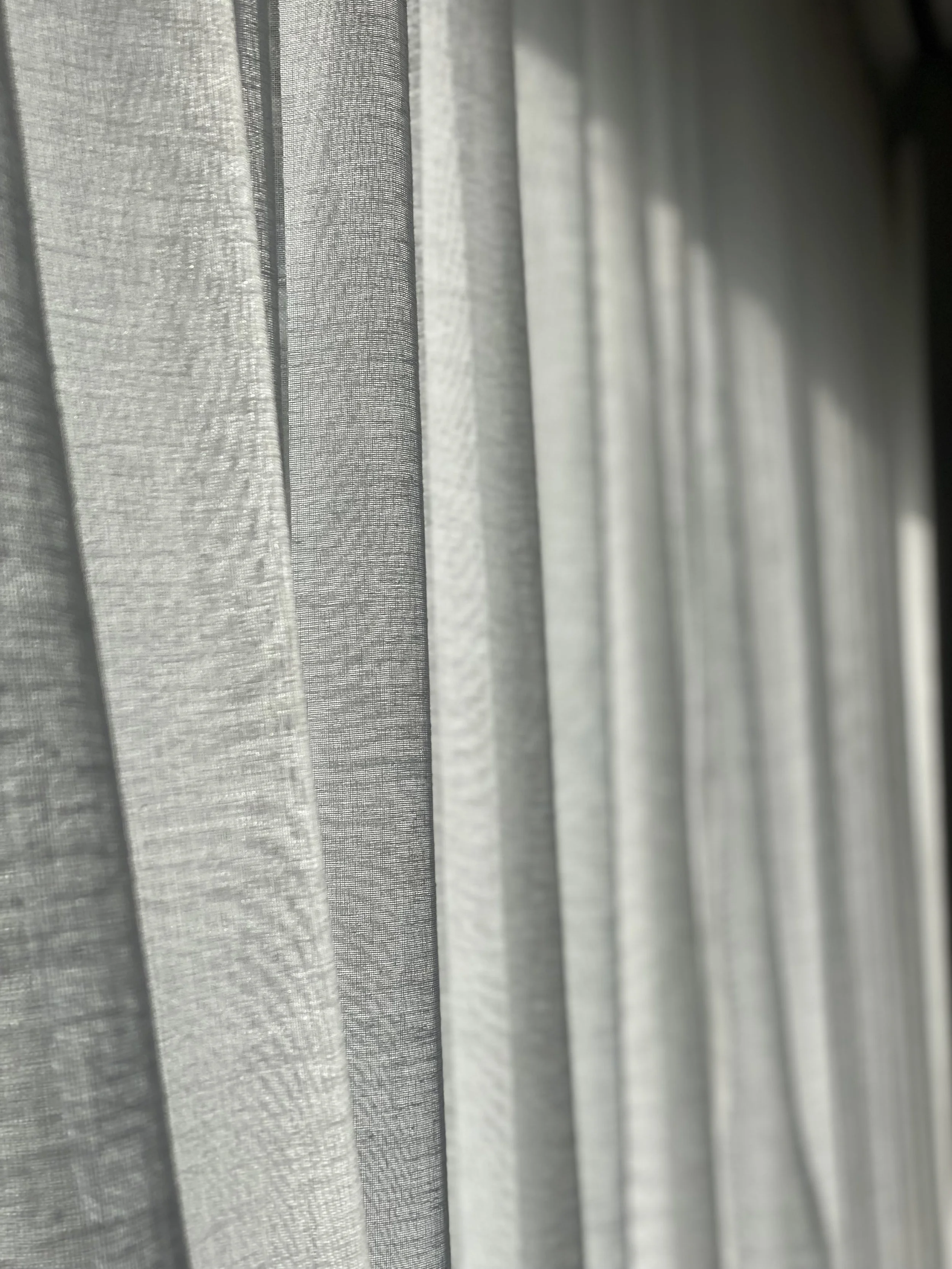
Voiles supplied and fitted by Jenna Basford Interiors
Curtains have a funny way of looking effortless.
They hang.
They soften a room.
They quietly do their job.
What you don’t see is everything that happened before they ever made it to the window.
The phone calls with the workroom (about stitches)
Hand-sewn or machine. Blind hems or visible. Fell stitch or flatbed stitch. Weighted corners or not.
These are the conversations no one ever sees - but they’re the difference between curtains that feel considered and curtains that feel… fine.
Bay windows: diagrams, sketches and mild maths
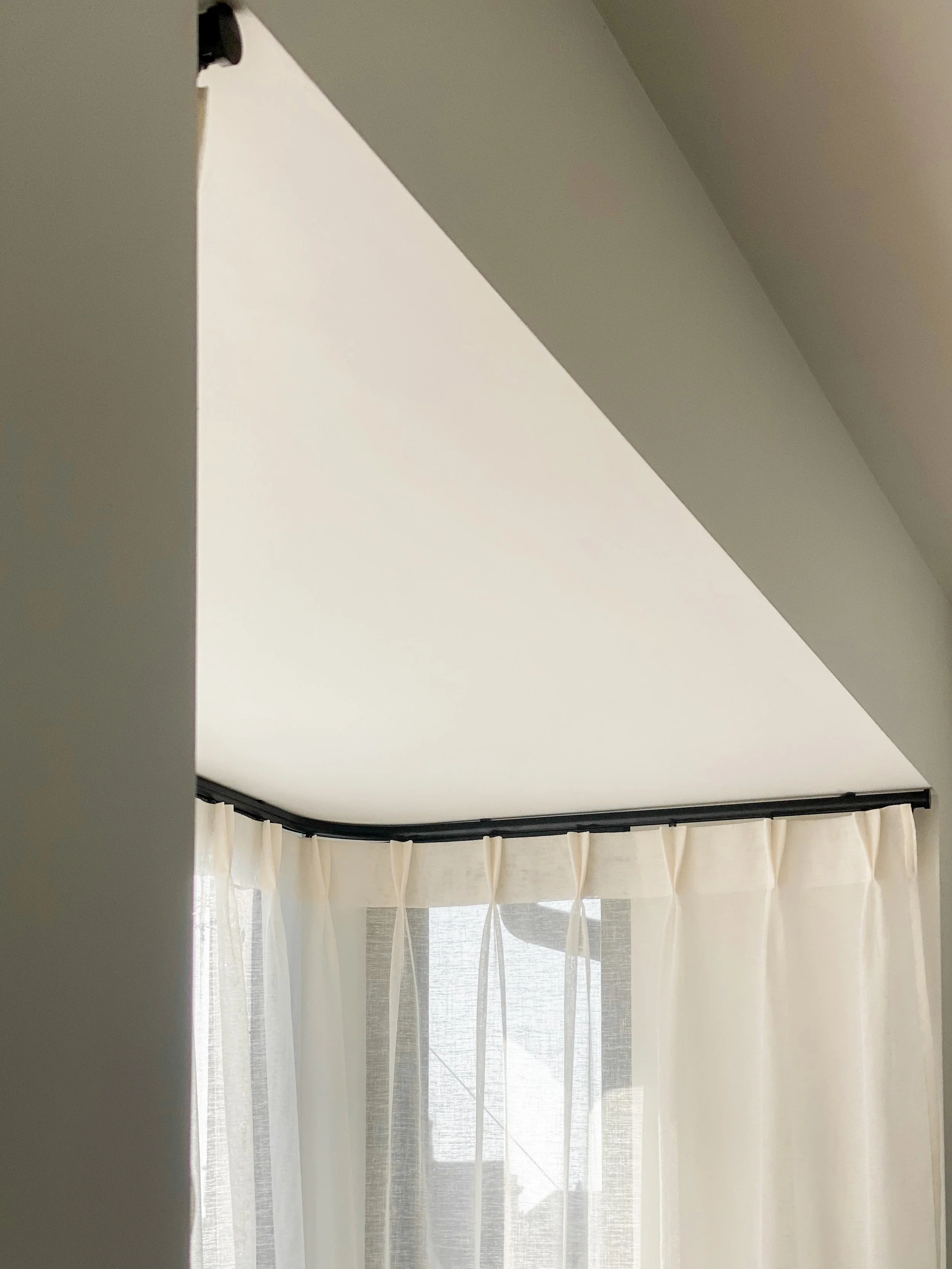
Bespoke voiles on a ceiling mount Silent Gliss pole in a box bay by Jenna Basford Interiors
Bay windows are beautiful but measuring them means:
Drawing diagrams (yes, actual diagrams)
Working out angles that don’t quite behave
Allowing for returns, overlaps and brackets that never land where you expect
Less “tape measure” and more “quiet problem solving”.
Back of pole vs centre of pole (same window, different story)
This is one of those details that sounds minor. It isn’t. Measuring to the back of the pole versus the centre changes:
Finished width
How the curtains stack
How much light sneaks in at the edges
The sort of thing you only notice when it’s wrong.
Stack back decisions (aka: how much wall are we giving up?)
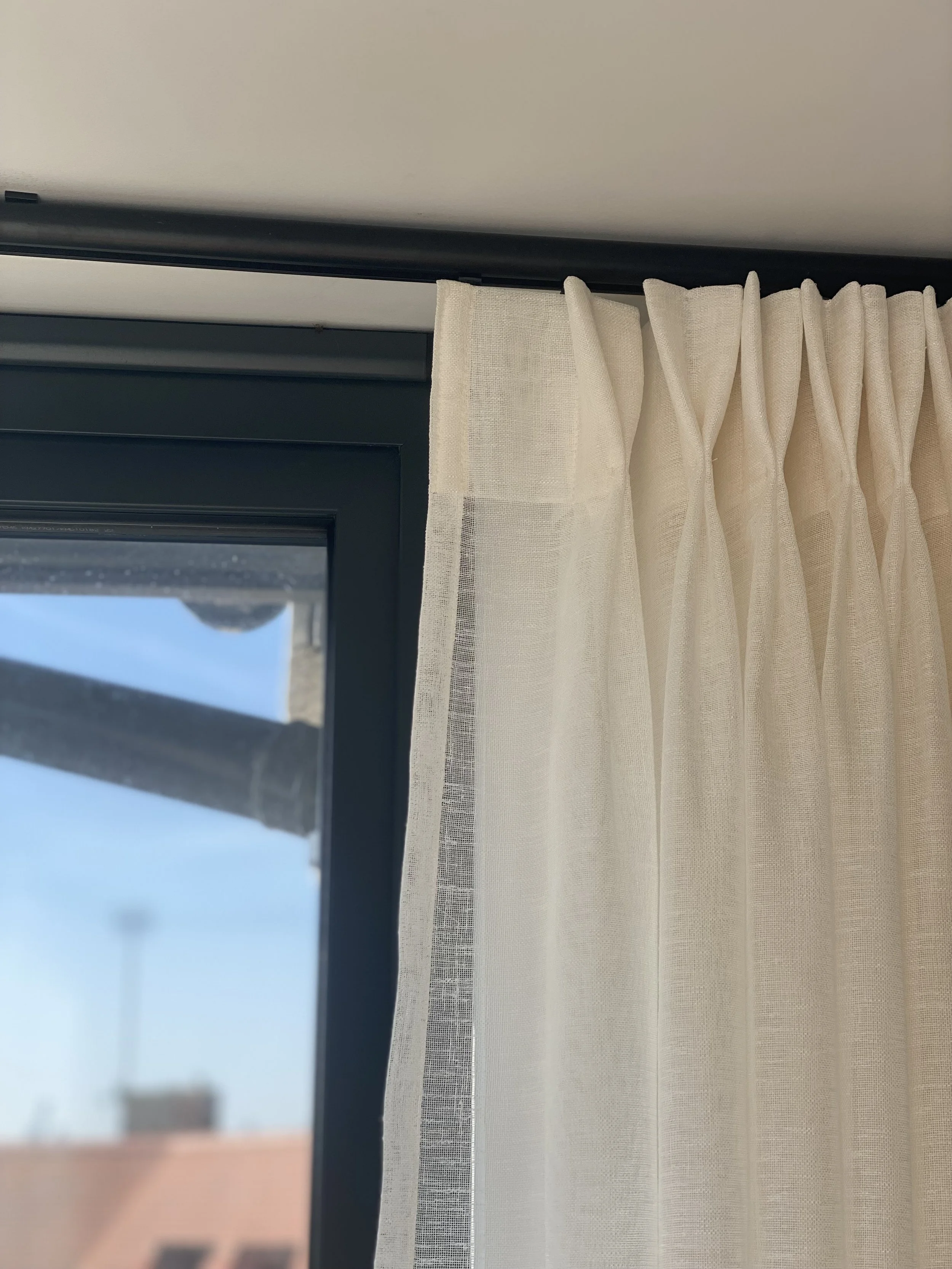
Pinch Pleat stack-back clearing side windows.
Curtains need somewhere to live when they’re open. So we’re always asking:
How much wall space can we sacrifice?
Will it block artwork/furniture?
Will it sit over glazing?
Do we want maximum light or maximum drama?
There’s no right answer, just the right balance for that room.
Heading decisions (this is where personality shows up)
Pinch pleat. Double pleat. Wave. Relaxed.
Same fabric, completely different energy.
This is where the curtains decide whether they’re tailored, casual, architectural or soft.
Fabric decisions (it’s never just colour)
Colour matters. But so does:
Weight
Drape
Pattern repeat
How it behaves when lined or interlined
A fabric that looks perfect on a hanger can behave very differently at full height.
Lining decisions (the hidden hero)
Standard lining, blackout, thermal, interlining. Ivory or Almond again potential to add pattern.
This is what affects:
Light control
Insulation
Structure
How luxurious the curtain feels in real life
No one ever compliments the lining. Everyone notices when it’s wrong.
The drop conversation
Ceiling fix? Sill height? Kiss the floor? Float? Puddle - just a bit, like we meant to?
Whilst also factoring in:
Flooring that hasn’t been laid yet
Radiator positions
Carpet and underlay
Future-proofing for changes
Furniture layouts
Delivery day logistics
Someone has to:
Coordinate delivery windows
Check access
Be there when it arrives
Make sure nothing is damaged
It’s not glamorous - but it matters.
Unpacking and quietly disposing of everything
By the time the curtains are hung on installation day:
Packaging has been removed
Labels snipped
And a surprising amount of plastic and cardboard responsibly dealt with.
All so it looks like… nothing much happened.
The goal?
That the finished curtains feel calm. Uncomplicated. And like they’ve always belonged there.
When it looks effortless, it’s because a lot of thought went into making it that way.
need help with yours?
If you’re looking for bespoke, made-to-measure window treatments - curtains, voiles or blinds - I’d be more than happy to help.
I work with trusted workrooms and makers to design and specify custom window dressings, from initial measuring and fabric selection through to lining choices, making, delivery and installation. Every detail is considered, so the finished result feels calm, tailored and right for your space.
If you’re planning a project and would like an estimate for bespoke curtains or made-to-measure window treatments, feel free to get in touch. I’m always happy to talk through options and guide you on what will work best for your home.
